
How to Choose the Right Vacuum for Your Home
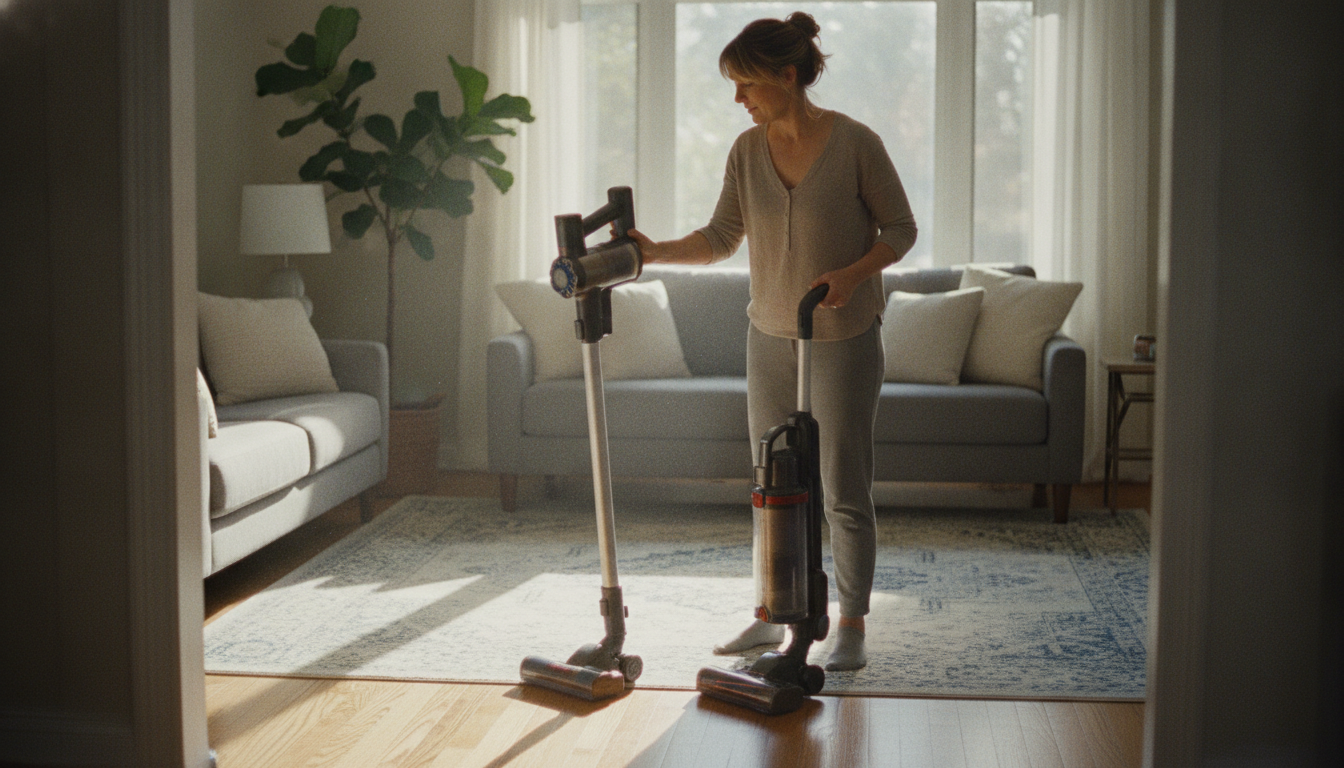
Quick answer: To choose the right vacuum, match it to your floors, your home size, and your mess. Pick a type like upright, stick, or canister. Then compare suction, filtration, and weight. Also check reviews and total cost so you get real value.
Key Takeaways
- Match the vacuum type to your floor mix before you shop.
- Suction, filtration, and weight matter more than a long feature list.
- Read real owner reviews to spot clogging or short battery life.
- Factor in filter and battery costs, not just the sticker price.
Buying a vacuum feels harder than it should. There are so many types and so many features. But it gets simple once you know your own home. Below is a clear way to choose the right vacuum without the stress.
What should you know before you choose the right vacuum?
Start with your home, not the store. Look at your floors first. Do you have carpet, hard floors, or a mix? Also think about stairs, rugs, and tight corners.
Next, think about your mess. Pet hair, crumbs, and fine dust all need different strengths. A small apartment needs less power than a big house with pets. When you know these things, you can choose the right vacuum that fits real life.
- Floor type: carpet, hard, or mixed
- Home size and number of floors
- Main mess: pet hair, dust, or crumbs
- Storage space and your strength
What are the main vacuum types?
There are a few basic types, and each one has a job it does best.
Upright vacuums work well on carpet. They often have strong suction and a big dust bin. However, they can feel heavy. Canister vacuums handle stairs and bare floors nicely. They are easy to steer but need two hands.
Stick vacuums are light and often cordless. They are great for quick cleanups and small homes. But the battery runs out and the bin is small. Robot vacuums clean on their own. They help with daily dust, though they do not replace a deep clean. Knowing these types makes it easier to choose the right vacuum for your days.
How do you compare suction and features?
Focus on a few key things, not a long spec list. Strong suction and good brushes matter most.
Look at the brush roll. A roll that turns off helps on bare floors. A tangle free design helps with long hair. Also check filtration. A sealed system with a fine filter traps more dust. This helps if anyone in your home is sensitive to dust.
Weight is a big deal too. A heavy vacuum is harder to carry up stairs. Also check the cord length or battery life. For example, a short cord means more outlet swaps. A short battery means you stop before the job is done. These small things add up fast.
Corded or cordless when you choose the right vacuum?
The answer depends on your home size and how you clean.
Corded vacuums give steady power and never die mid clean. They suit big homes and deep cleaning. However, the cord can be a pain on stairs. Cordless vacuums are light and quick to grab. They are perfect for fast daily pickups. But you may need a spare battery for larger spaces. Think about your routine, then choose the right vacuum that keeps you cleaning instead of charging.
How do you judge value and avoid overpaying?
Value is about the full cost, not just the price tag.
Vacuums have ongoing costs. Bags, filters, and batteries all cost money over time. A cheap vacuum with pricey filters may cost more in the long run. So add up those parts before you buy. Also check how easy parts are to find and replace.
Read real owner reviews, not just star ratings. Look for words like clogging, loss of suction, or weak battery. Those patterns tell the truth. For trustworthy buying habits, the Consumer Reports site is a solid place to learn how to spot quality.
Also watch the warranty. A longer warranty often signals the maker trusts the build. And do not fall for a huge feature count. Many extra tools sit in a drawer forever. Fewer, useful tools beat a pile of gadgets you never use.
A quick buying checklist
Before you pay, run through this short list. It keeps you honest and helps you choose the right vacuum with less regret.
- Does it match my main floor type?
- Is it light enough for stairs and storage?
- How much do filters and batteries cost later?
- Do reviews mention suction loss or clogging?
- Is the warranty fair and clear?
Make your final pick with confidence
Take your time and trust your own needs. The best vacuum is the one you will actually use often. It should fit your floors, your home, and your hands. Compare a few models side by side. Then shop smart, check the full cost, and bring home a vacuum that works for years. Happy cleaning.
Frequently Asked Questions
What type of vacuum is best for pet hair?
Look for a vacuum with strong suction and a tangle free brush roll. A sealed filter helps trap fine dander too. Upright and canister models often handle pet hair well. Also pick an easy to empty bin, since pet hair fills a vacuum quickly during cleaning.
Is a cordless vacuum worth it?
A cordless vacuum is worth it for small homes and quick daily pickups. It is light and easy to grab. However, battery life is limited, so big homes may need a spare battery. For deep, long cleaning sessions, a corded model often gives steadier power.
How much should I spend on a vacuum?
Spend based on your home size, floor type, and how often you clean. Remember the full cost, not just the price. Filters, bags, and batteries add up over time. A mid range vacuum that lasts years usually beats a cheap one that needs constant replacement parts.
Do I need a HEPA filter vacuum?
A fine filter like HEPA helps if anyone in your home is sensitive to dust. It traps tiny particles that cheaper filters miss. A sealed system matters too, so dust does not leak out the sides. If dust is not a concern, a standard good filter may be enough.
How do I know if a vacuum has good suction?
Read real owner reviews and look for notes about picking up pet hair, crumbs, and fine dust. Watch for complaints about suction loss over time. Strong brushes and a clean filter path matter more than one single number listed on the box.
Are robot vacuums enough on their own?
Robot vacuums are great for daily dust and light messes. They keep floors tidy with little effort. However, they do not replace a deep clean. Most homes still need a regular vacuum for corners, stairs, and heavy messes. Think of a robot as a helpful extra, not a full replacement.
For more, see our Shopping Guides section.
Prices and availability change often. Always check the current price and the full details on the seller’s own page before you buy.